Hiring Remote Teams in Vietnam 2026: EOR vs Entity, Costs, Rules
EOR or your own entity? We compare costs, timelines and compliance for hiring remote teams in Vietnam in 2026, with real budget numbers.

Vietnam has quietly become one of the most attractive places in Asia to build a remote team. The talent pool is deep - hundreds of thousands of software engineers, plus strong finance, design and customer-operations talent - English proficiency among younger professionals keeps improving, and total employment costs remain a fraction of Singapore's or Australia's. The question we get from foreign companies is rarely "why Vietnam" anymore. It is "how": employer of record, or our own entity? Here is how we frame that decision in 2026.
The three ways to engage people in Vietnam
- Independent contractors. Fast and paperwork-light - and the riskiest option at scale. Vietnamese labor authorities and tax rules look at substance: fixed hours, ongoing exclusive work and manager supervision point to disguised employment. Misclassification exposes you to back social insurance, personal income tax issues and labor disputes. Contractors are defensible for genuinely independent, project-based specialists; they are a poor foundation for a core team.
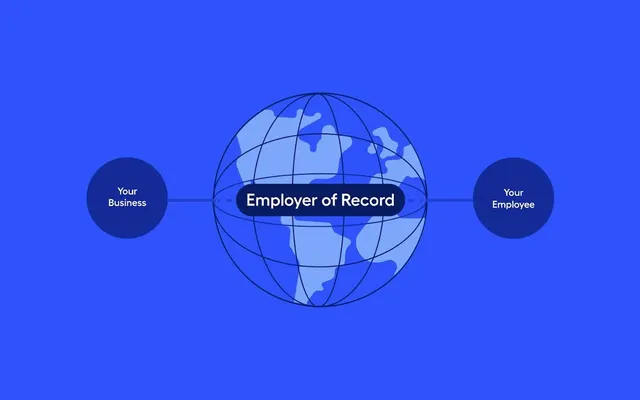
- Employer of record (EOR). A licensed local employer hires your team members under Vietnamese labor contracts and seconds their services to you. You direct the work; the EOR handles contracts, payroll, personal income tax withholding, social insurance and statutory benefits. Onboarding typically takes days, not months.
- Your own entity. A wholly foreign-owned company gives you full control, direct employment and a platform for invoicing local customers - at the cost of setup time (typically a few months including licensing), ongoing accounting, tax filings, audits and a resident legal representative.
What employment actually costs in 2026
Foreign budget owners consistently underestimate the gap between gross salary and total cost. On top of gross pay, employers contribute to social insurance, health insurance and unemployment insurance - in aggregate typically around 21–22% of the salary base, subject to contribution caps. Employees contribute roughly another 10.5%, withheld from pay. Add 13th-month salary (a near-universal market expectation), annual leave of at least 12 working days, public holidays, and mandatory annual health checks. The revised Social Insurance Law that took effect in mid-2025 broadened coverage and reworked the contribution base concept, so have your payroll provider confirm current caps and rates rather than reusing an old spreadsheet.
As rough 2026 market ranges: mid-level software engineers typically earn around US$1,500–3,000 gross per month, senior engineers and leads more; experienced accountants around US$800–1,500; customer support from around US$500–900. Ho Chi Minh City and Hanoi command premiums over Da Nang and second-tier cities.
EOR versus entity: the comparison that matters
| Dimension | EOR | Own entity |
|---|---|---|
| Time to first hire | Days to 2 weeks | Typically 2–4 months (licensing first) |
| Upfront cost | Low (service fee per employee) | Incorporation, capital, office, advisors |
| Ongoing admin burden | Minimal for you | Accounting, tax filings, annual audit, statutory reporting |
| Can invoice Vietnamese customers | No | Yes |
| Employment compliance risk | Carried mainly by EOR | Carried by you |
| Typical break-even scale | Best under ~10–15 staff | Better beyond ~15–20 staff or with local revenue |
| Work permits for foreign staff | Possible via EOR sponsorship, with limits | Sponsored by your entity |
The break-even numbers are directional, not gospel: a five-person team with local sales plans may justify an entity immediately, while a forty-person pure engineering hub can rationally stay on EOR if the company wants zero local administration. The pattern we see most often - and usually recommend - is sequential: start on EOR, convert to your own entity once headcount, permanence and local commercial activity justify it, and transfer employees with continuity of service terms.
Compliance points that surprise foreign employers
- Labor contracts are formal. Written contracts in prescribed forms, probation limits (commonly up to 60 days for most professional roles), and defined term rules all apply. At-will employment does not exist; termination requires statutory grounds and process.
- Personal income tax is progressive and employer-withheld. Rates run from 5% to 35% for residents. Net-pay promises to candidates can get expensive - always negotiate gross.
- Overtime is capped and premium-paid. Legal caps on overtime hours apply annually; premiums run from 150% upward depending on timing. Plan delivery schedules accordingly.
- Remote does not mean unregulated. Work-from-home staff are ordinary employees for labor law, insurance and tax purposes. Equipment, expense and data-security policies should be localized.
- Data protection now applies to HR. Vietnam's Personal Data Protection Law covers employee data, including transfers to offshore HR systems - your hiring flow needs compliant consent and transfer documentation.
Recruiting realities
Hiring in Vietnam is competitive at the senior end. Strong engineers receive multiple offers; counteroffers after resignation are routine; and the weeks after the Lunar New Year bonus season are the market's busiest switching window. Employer brand matters - candidates research foreign employers carefully and value stability, learning opportunities and clear career paths alongside salary. Budget 13th-month pay as standard, private health insurance as a common differentiator, and realistic notice periods (30–45 days is typical for professionals).
Our recommendation framework
Choose contractors only for true independents. Choose EOR when speed matters, headcount is under roughly fifteen, or you are still validating Vietnam. Choose an entity when you need to serve Vietnamese customers, sponsor multiple foreign staff, or your team has reached a scale where EOR service fees exceed the cost of running an entity. And whichever route you take, get the employment documents right the first time - unwinding non-compliant arrangements costs far more than doing it properly.
Ready to build your Vietnam team? Our employer of record service hires, pays and administers your Vietnamese staff compliantly - with a clean upgrade path to your own entity when you are ready.